
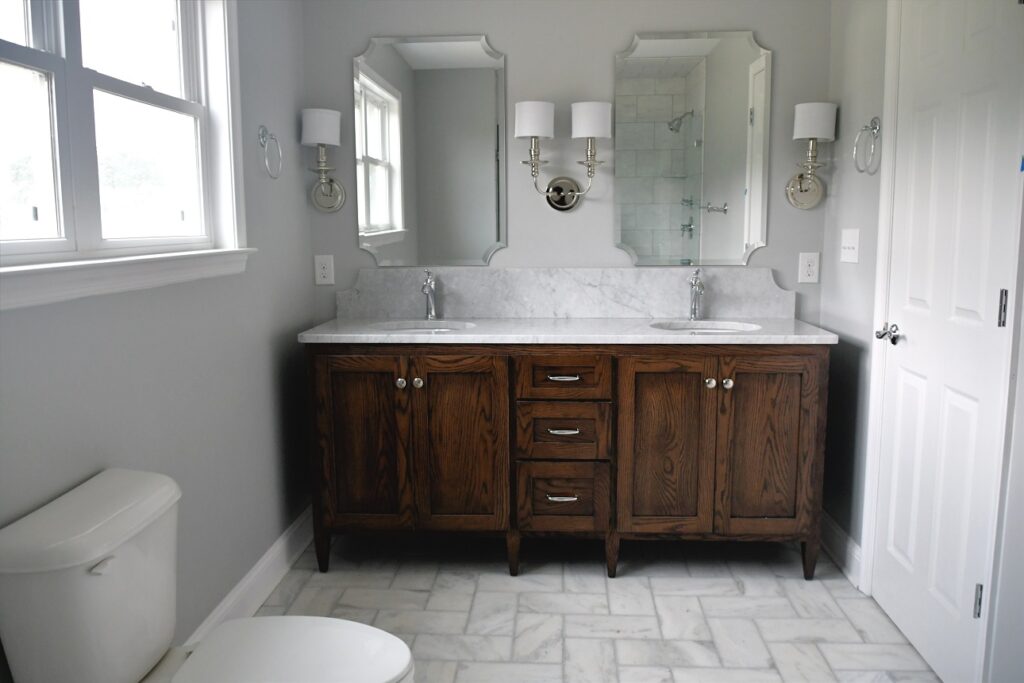
A homeowner in Astoria called us in June. She got three bathroom quotes. They ranged from $19,000 to $58,000. All three contractors were licensed. The spread wasn’t a scam. It came down to scope. One quote kept the plumbing where it was. Another moved the toilet six inches. That small move triggered a full ALT2 filing with the NYC Department of Buildings. NYC bathroom renovations in 2026 typically cost $20,000 to $90,000 or more. The biggest cost driver isn’t finishes. It’s whether your layout changes. This guide covers 2026 pricing by scope and borough. It also covers DOB permit rules, design trends, and how to vet a contractor. General Contractor NYC is a referral network. We match you with vetted, licensed contractors. We don’t perform the renovation work ourselves.
NYC Bathroom Renovation Costs in 2026, by Scope
| Project Type | 2026 Cost Range | What’s Included |
|---|---|---|
| Cosmetic refresh | $8,000 – $20,000 | New vanity, toilet, tile, lighting — plumbing stays put, usually no DOB permit |
| Standard full renovation | $20,000 – $45,000 | Gut to studs, new waterproofing, mid-range fixtures, layout unchanged |
| Layout change / relocation | $45,000 – $70,000 | Moved plumbing, ALT2 filing required, PE/RA fees included |
| High-end / luxury primary | $70,000 – $150,000+ | Custom millwork, natural stone, heated floors, layered lighting |
Powder rooms cost less. Expect $10,000 to $22,000. There’s no tub or shower to waterproof. Co-op and condo buildings add real cost on top of these ranges. Expect $500 to $2,000 in board fees. Freight elevator charges run $200 to $500 per day. Buildings with strict work hours can add 5% to 10% more, no matter what finishes you pick.
Why Manhattan Costs More Than the Outer Boroughs
Manhattan bathroom renovations cost 15% to 25% more than the same job in Queens or the Bronx. This isn’t padding. It comes from elevator scheduling, tighter loading docks, higher labor rates, and co-op board rules. Outer boroughs often skip these entirely. Brooklyn brownstones add their own twist. Their plumbing stacks are old. They weren’t built for modern fixture layouts. That can push a “standard” job into layout-change territory once a contractor opens the wall. Staten Island and eastern Queens homeowners in houses see the lowest logistics costs. There’s no building management or elevator to coordinate.
Do You Need a DOB Permit for Your Bathroom Renovation?
Most NYC bathroom renovations need an ALT2 permit. It must be filed through DOB NOW by a licensed Professional Engineer or Registered Architect. You’ll need one if the job moves plumbing, adds electrical circuits, or changes ventilation. Purely cosmetic work usually doesn’t need DOB approval. That means new tile, a swapped vanity, or a repainted ceiling with no fixtures moved. If a contractor says a full gut renovation with moved plumbing needs no permit, that’s a red flag. It’s not a shortcut. Unpermitted plumbing work can surface later. It can become a problem when you sell your co-op.
Simple ALT2 bathroom filings often qualify for self-certification. That can turn a weeks-long permit into a days-long one. Filing fees for a standard bathroom ALT2 typically run $1,500 to $6,500. Add $3,000 to $15,000 or more in architect or engineer fees. Ask any contractor you’re vetting who will file the ALT2. Ask if they’re using self-certification. Ask how DOB inspection scheduling fits your timeline before you sign a contract.
Co-op and Condo Board Approval: What Actually Slows Projects Down
Board alteration agreements are where NYC bathroom timelines go sideways. Most co-op boards want your contractor insured to specific limits. They want a certificate of insurance naming the building. They often set work hours, usually 9am to 5pm on weekdays. Waterproofing sign-off is a common sticking point. Some boards require a licensed inspector to check the pan and membrane before tile goes down. That adds a delay most homeowners don’t plan for. Get your board’s rules in writing before you finalize a bid. A quote that skips insurance riders or inspection holds will be too low.
A realistic co-op bathroom timeline looks like this. Plan two to four weeks to prep and submit the alteration agreement. Plan four to eight weeks for board review, longer if the board meets monthly. Plan one to two weeks for ALT2 permit issuance. Then plan six to ten weeks of construction, depending on scope. Homeowners often assume work starts the week they sign a contractor. They usually underestimate the timeline by six to twelve weeks. Ask your managing agent for the board’s meeting schedule first. A board that meets quarterly, not monthly, can add months you didn’t plan for.
Tub-to-Shower Conversion: A Separate Cost Line Most Quotes Bury
Converting a tub to a walk-in shower is a popular request. It’s also one of the most inconsistently quoted jobs. Demo and reframing alone run $2,500 to $5,000. Waterproofing a curbless or low-curb pan adds another $1,500 to $3,500, depending on drain type. This is the part that prevents a callback six months later. Glass enclosures range from $800 for a basic sliding panel to $4,500 or more for frameless custom glass. If a bid lists “tub-to-shower conversion” as one line under $5,000 total, ask what’s excluded. That number rarely covers code-compliant waterproofing in an NYC apartment. Buildings built before 1960 sometimes have cast iron tub drains. Those need extra plumbing work to reroute for a shower pan. That surprise usually shows up only after demo starts.
Fixture and Materials Pricing: What Drives Your Number Up or Down
| Item | Budget-Friendly | Premium |
|---|---|---|
| Toilet | $200 – $500 | $1,500 – $5,000 |
| Vanity | $400 – $1,200 | $2,500 – $8,000 |
| Tub | $300 – $800 (acrylic) | $1,500 – $6,000+ (freestanding) |
| Tile | $3 – $8 per sq ft (ceramic) | $15 – $50 per sq ft (natural stone) |
Labor rates compound these choices. NYC plumbers typically bill $150 to $250 per hour. Electricians bill $125 to $200. Tile installers bill $75 to $150. A premium tile choice doesn’t just cost more per square foot. It usually takes a skilled, higher-rate installer longer to set. That’s why a small upgrade in finishes can move total cost more than you expect. When comparing bids, ask what tier of materials the labor hours assume. A lower bid sometimes just assumes cheaper finishes than the ones in your mood board.
2026 Bathroom Design Trends in NYC Apartments
Natural stone surfaces and large-format tile still dominate mid-to-high-end NYC bathrooms this year. Fewer grout lines read as more spa-like in small spaces. Warm metal fixtures, like brushed brass and matte black, have replaced chrome as the go-to finish. Primary bathrooms in bigger apartments increasingly feature dual sinks. That’s a shift from the single-vanity layouts common in older pre-war buildings. For small NYC bathrooms, the biggest trend is wall-mounted vanities and recessed niches. They reclaim floor space without touching the plumbing. That keeps the project in cosmetic-refresh territory, not layout-change territory.
Smart fixtures have moved from novelty to standard spec on higher-end 2026 projects. Digital shower valves with preset temperature memory are common now. So are LED mirrors with defog and dimming, and toilets with built-in bidet functions. These show up in mid-to-high-end Manhattan and Brooklyn renovations. None of them need extra DOB filing beyond a standard fixture swap. But they do add $1,500 to $6,000 to a budget, depending on how many you pick. Flag these early so they’re priced into the original bid, not added later as a change order.
Small Bathroom Renovation: NYC-Specific Space Strategies
Pre-war apartments in Manhattan and Brooklyn often have bathrooms under 40 square feet. The fix isn’t always a bigger footprint. It’s layout discipline. Pocket doors instead of swing doors reclaim six to eight square feet of floor space. A curbless shower with a linear drain reads larger and removes a tripping hazard. It needs more precise waterproofing, though, and typically adds $2,000 to $4,000 to a standard budget. Sliding glass instead of a shower curtain removes clutter without touching plumbing at all. It’s a cosmetic-only change that keeps costs and permitting simple.
Borough-by-Borough: What Changes About Your Renovation
Manhattan. Nearly every Manhattan renovation runs through a co-op or condo board. That means insurance riders, work-hour rules, and often a refundable damage deposit of $1,000 to $5,000. Freight elevator scheduling is often the real bottleneck, not labor. Some buildings offer only two elevator windows a week for deliveries and debris removal.
Brooklyn. Brownstones and pre-war walk-ups dominate much of the borough. Their plumbing stacks are old. They weren’t built for modern fixture placement. A contractor who hasn’t worked in your building type can misjudge what’s behind the wall. Ask specifically about brownstone experience if that’s your building. DOB filing rules stay the same, but demo surprises don’t.
Queens. A wider mix of co-ops, condos, and single-family homes means logistics costs vary the most here. A detached house in Bayside carries no elevator or board-approval costs. A co-op in Forest Hills looks much more like a Manhattan project.
Bronx and Staten Island. Single-family and small multi-family housing is more common here. That usually means lower logistics costs and faster permit-to-start timelines. But it also means fewer local contractors have deep co-op board experience, if your building needs it.
Bathroom Renovation Mistakes NYC Homeowners Make
Skipping board approval because “it’s just a bathroom” is the most expensive mistake here. Boards can issue stop-work orders for unapproved alterations. That halts the project mid-demo and adds legal and rescheduling costs on top of the delay. Signing a contract before confirming who files the ALT2 is the second mistake. If neither side is clearly responsible, the permit gets filed late. In DOB terms, “late” can mean weeks, not days. Choosing tile before confirming the waterproofing method is the third mistake. Some tile formats need different substrate prep. Picking finishes before the waterproofing plan is locked can force a costly swap mid-project. Finally, don’t assume a much lower quote means a better deal. Often it just means a smaller scope. Homeowners who miss this end up with change orders that erase the savings.
How to Vet a Bathroom Contractor in NYC
Confirm HIC license status directly through NYC’s Department of Consumer and Worker Protection before any quote talk. A valid license number is non-negotiable. Ask for two references from co-op or condo projects specifically. Board-managed jobs need different insurance and scheduling than private houses. Get the ALT2 filing responsibility in writing. Confirm whether the contractor’s PE or RA handles it, or whether you need to hire one separately. This changes your timeline and total cost. General Contractor NYC pre-vets contractors on license status, insurance, and board-project history before matching. You’re not running this check cold.
Budgeting for the Unexpected: What to Set Aside
Every NYC bathroom renovation budget needs a contingency line. Set aside 15% to 20% for pre-war buildings. Newer construction can often get away with 10%. Common overrun triggers include hidden plumbing behind the wall. Another is asbestos abatement in buildings renovated before 1980. The ACP5 assessment is required before demo. Abatement can add $1,500 to $4,000 plus a delay. Board-mandated changes are another trigger, like a required upgrade to a shutoff valve the board didn’t flag earlier. Homeowners who set aside 10% or less often face a mid-project choice. It’s usually a change order or a paused job. Many NYC homeowners use a HELOC or renovation loan instead of cash. Draw schedules tied to permit milestones line up naturally with contractor payment schedules. Milestones include DOB approval, rough-in inspection, and final sign-off.
Get matched with a vetted, licensed bathroom contractor in your borough.
Frequently Asked Questions
How much does a bathroom renovation cost in NYC in 2026?
Most NYC bathroom renovations in 2026 cost $20,000 to $45,000 for a standard full gut, with no layout changes. Cosmetic refreshes start around $8,000. Layout changes with moved plumbing typically run $45,000 to $70,000 once ALT2 filing and engineering fees are included.
Do I need a permit to renovate my bathroom in NYC?
Yes, if the work moves plumbing, adds electrical circuits, or changes ventilation. That requires an ALT2 permit filed by a licensed PE or RA through DOB NOW. Cosmetic updates, like new tile or a swapped vanity with no fixtures moved, generally don’t need a DOB permit.
Why is bathroom renovation more expensive in Manhattan than Brooklyn or Queens?
Manhattan projects cost 15% to 25% more. Reasons include stricter co-op board rules, freight elevator fees, tighter work-hour windows, and higher labor rates. Outer-borough single-family homes generally avoid building-management logistics costs entirely.
How long does a bathroom renovation take in an NYC co-op?
A standard co-op bathroom renovation typically takes six to ten weeks once the board approves it. Board review alone can add four to eight weeks before work starts. Waterproofing inspection holds required by some boards can add several more days.
What’s the difference between a cosmetic refresh and a full renovation?
A cosmetic refresh keeps the existing plumbing and layout. It swaps finishes like the vanity, toilet, and tile, and usually needs no DOB permit. A full renovation means demolition to the studs, new waterproofing, and often an ALT2 filing if any fixture moves.
How much should I budget for contingency on a bathroom renovation?
Set aside 15% to 20% of your budget for pre-war NYC buildings. Hidden plumbing and possible asbestos abatement are common there. Newer construction can typically budget closer to 10%. Homeowners who skip a contingency line are most likely to hit a paused project when costs surface mid-demo.
Does a tub-to-shower conversion need a DOB permit in NYC?
Yes, in most cases. Converting a tub to a shower usually reworks the drain and waterproofing system. That counts as plumbing relocation and requires an ALT2 filing. Confirm with your contractor’s PE or RA before assuming a conversion is cosmetic-only.
Sources
NYC Department of Buildings — Renovating Kitchens & Bathrooms